Start with the Gospel
“For I delivered to you as of first importance what I also received: that Christ died for our sins in accordance with the Scriptures, that he was buried, that he was raised on the third day in accordance with the Scriptures.”
1 Corinthians 15:3–4Paul didn’t assume the church already had the gospel figured out. He reminded them of it. He called it the thing of first importance — not a starting point to move past, but a foundation to return to again and again. If the apostle Paul believed the church needed to be reminded of the gospel, so do our small groups.
Every gospel visual below comes with a free facilitator guide, participant handouts, and follow-up lessons.
Why Start with the Gospel?
Every group is a mixed room. Some people sitting in your circle have been following Jesus for years. Others are still figuring out what they believe. Some walked away from faith and are finding their way back. And some may be hearing the gospel clearly for the very first time — even if they’ve been in church their whole lives.
Starting a new semester, a new series, or a new group with a clear gospel presentation honors every person in that room. It gives newer believers a foundation to stand on. It gives seekers a chance to respond. And it reminds more mature believers of the very thing their faith is built on — because the gospel is not just how we enter the Christian life, it is the foundation of everything that follows.
There is also a practical reason to start here. When leaders teach the gospel visually and then have participants practice sharing it themselves, something shifts. People engage differently. They lean in. They ask questions they’ve been holding onto for years. The gospel becomes something they own — not just something they’ve heard.
How These Resources Work
Each gospel visual has its own page with everything you need. The pieces are the same across all of them.
The facilitator guide is your training tool. It walks you through presenting the gospel visually to a group, with the full teaching script, conversation starters, and a salvation invitation to close. It is what you read before you lead.
The follow-along sheet is what your group draws on. Participants sketch the visual as you teach and keep the sheet for every session that follows.
Then you choose a follow-up. If you are training people to share the gospel themselves, they practice explaining the visual to each other. If you are presenting the gospel to a group, they go into a study instead — either placing verses onto the visual they drew, or working through a passage that shows the gospel lived out.
These are modules, not steps. Use one, use several, spread them over several weeks — whatever your group needs.
Choose Your Gospel Visual
Each of the three has its own strengths — and the right one depends on your group and your setting. You do not need to use all three.

The Three Circles gives the fullest picture of the Christian life. It shows not just how the gospel saves us, but what God restores us to and what He sends us to do — Grow and Go. It is a slightly more intricate drawing, but once participants learn it they have a complete gospel framework they can carry into any conversation.

The Four uses four simple signs — a heart, a division sign, a cross, and a question mark — making it easy to draw and easy to remember. It covers the same essential gospel message in a format that feels approachable for both the person sharing and the person hearing it.
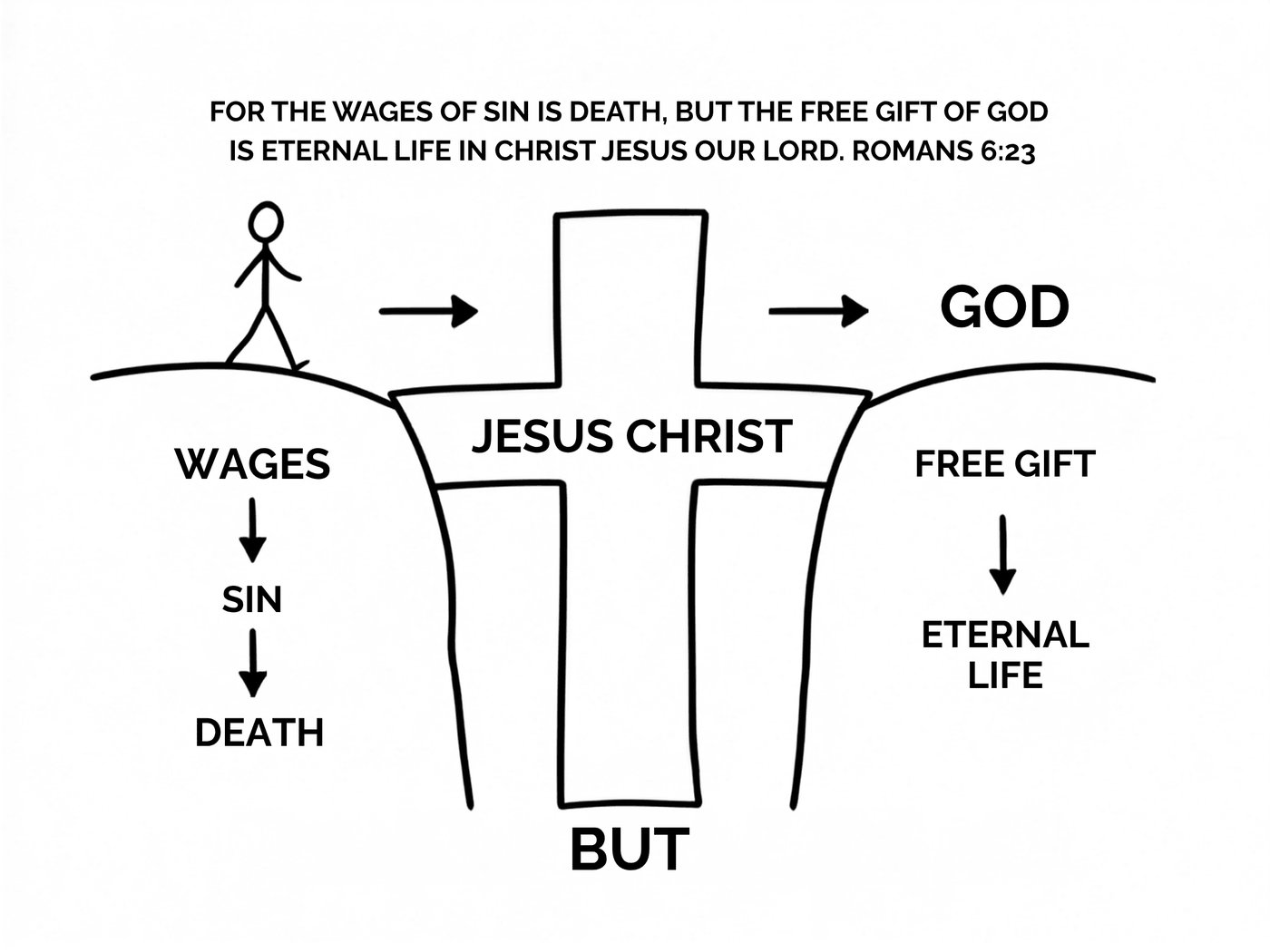
The Bridge is anchored in a single verse — Romans 6:23 — which makes it uniquely memorable. When participants learn to walk someone through the gospel using that one verse, they discover that the gospel is already in their hands every time they open their Bible. It is especially effective one-on-one and in smaller, more conversational settings.
A Note to the Facilitator
One more thing worth noting — the practice of drawing and sharing the visual is essential. That hands-on repetition is exactly what makes the gospel stick. The natural outcome is that once participants have drawn it, explained it, and practiced it with a partner, the visual lives in their memory. They can walk someone through the gospel in any conversation, any setting, with or without a pen or paper — because the picture is already in their head.
Starting with the gospel sets the tone for everything that follows. It tells your group what matters most, invites everyone into the same foundation, and sends them out equipped — not just informed.